
Rubber Recess Former With Nut & Bolt
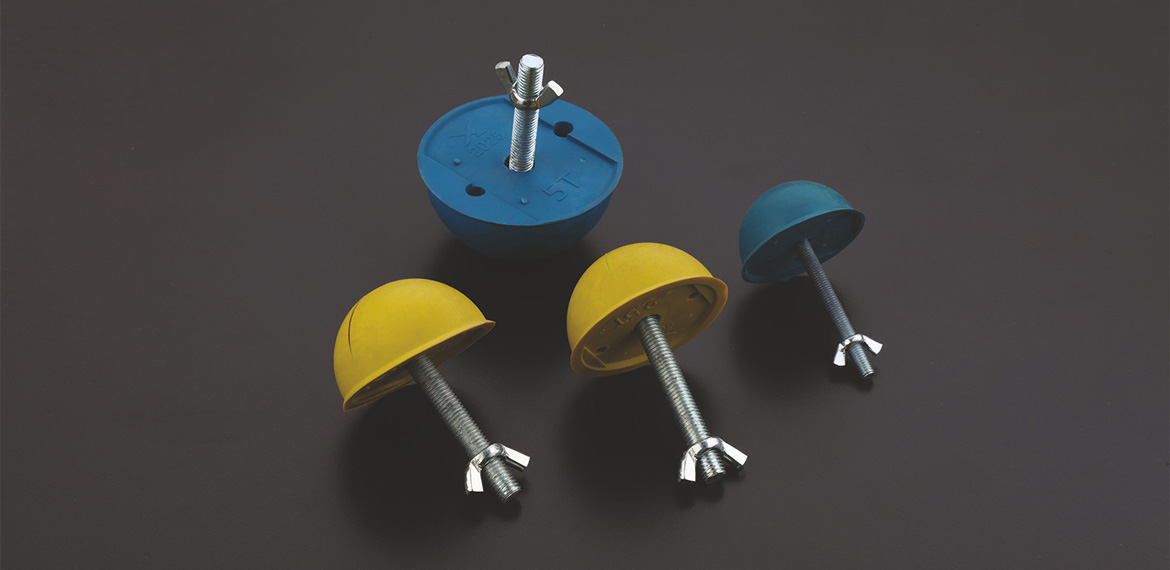
Reusable and Cost-Effective:
Due to their durable material and design, these formers can be used multiple times (often 30-40 times or more with proper maintenance), making them an economical choice over time.
Precise Positioning:
They ensure the accurate and secure location of the lifting anchor, forming a clean, bowl-shaped recess in the concrete that allows the lifting clutch to engage correctly.
Protection:
The former protects the anchor head from the wet concrete during casting, ensuring it remains clean and ready for the lifting clutch connection after demolding.
Load Group Identification:
To minimize the risk of error, the formers are often color-coded or permanently marked with the compatible anchor's Working Load Limit (WLL) or load group.
Easy Removal:
After the concrete has cured, the former is designed for easy stripping. Rebar or removal tools can be inserted into designated openings to leverage the plug out of the cured concrete without damage to the concrete or the former itself.
Versatile Application:
They are suitable for various precast concrete components like wall panels, beams, pipes, and manholes, enabling safe lifting and transportation.
Usage and Installation:
To use, the rubber former is placed over the anchor head, closed securely, and then the assembly is fixed to the formwork via the nut and bolt. Lubricating the former and anchor with formwork oil before use is recommended to ease the demolding process.